
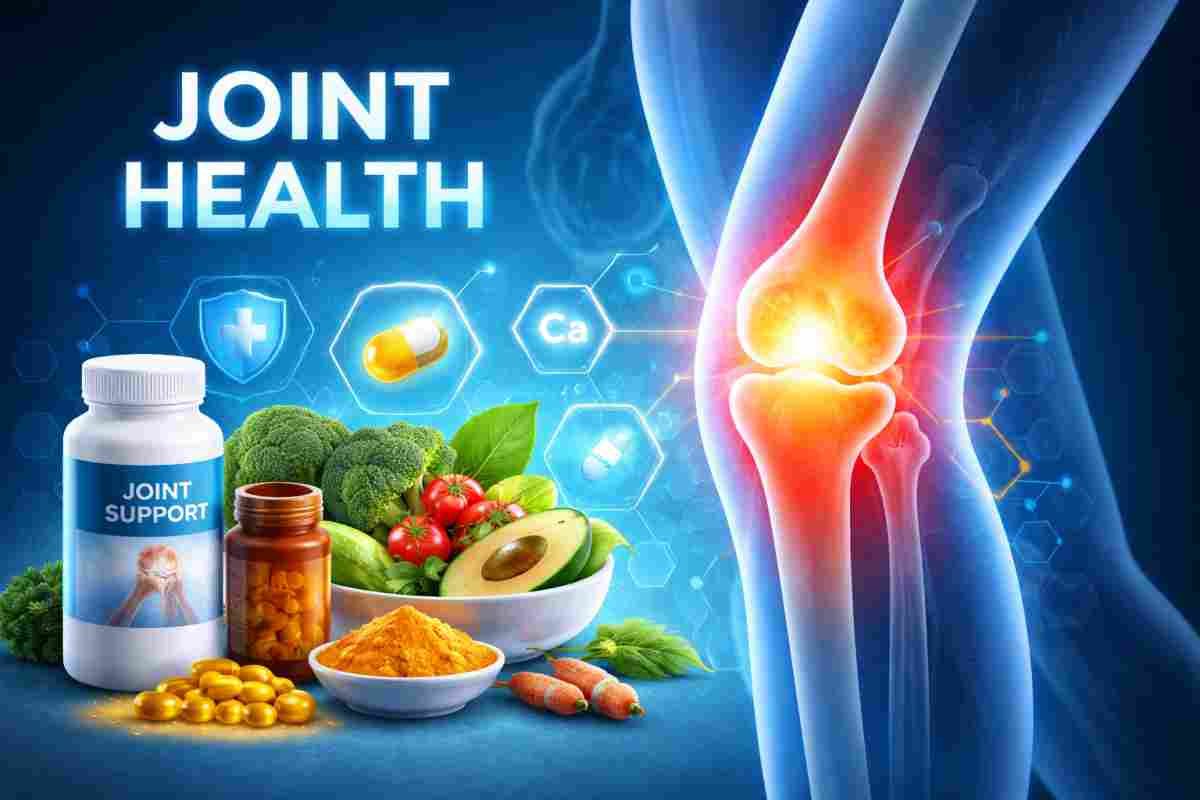
The Pop and Crack of a New Decade joint health supplements
If you are reading this, you have probably felt it. That tiny pop in your knee when you stand up from a low chair. The stiff ache in your knuckles first thing in the morning. Or that dull, nagging sensation in your hip after a long walk.
For millions of adults over 40—and increasingly, for active younger people in their 30s—joint discomfort has shifted from “an old person’s problem” to a daily reality. In response, the wellness industry has flooded the market with bottles promising miracle cures.
But here is the hard truth: Joint health supplements are a $10 billion industry, but very few of them actually work.
I have spent the last three months digging through clinical trials, speaking with orthopedic pharmacists, and separating the marketing fluff from the molecular biology. Whether you are a weekend warrior, a desk jockey with back pain, or a retiree trying to garden without ibuprofen, this guide is for you.
Let’s cut through the noise.
Why Your Cartilage is Starving (The Biology Brief)
Before we talk about pills, we need to talk about why your joints hurt.
Unlike your liver or skin, articular cartilage (the white, slippery stuff at the ends of your bones) has no direct blood supply. It doesn’t bleed when you cut it because it lives in a low-oxygen environment. It gets its nutrition via synovial fluid—a thick, egg-white-like substance that lubricates the joint.
Think of your cartilage like a sponge. When you walk, the sponge gets squeezed, pushing out waste. When you rest, the sponge expands, sucking in fresh nutrients.
As we age, or after repeated trauma (sports, heavy lifting), two things happen:
- The “sponge” becomes brittle and frayed.
- The body’s production of the building blocks of cartilage—collagen and proteoglycans—slows down.
This is where joint health supplements come into play. Theoretically, they provide the raw materials your starving cartilage needs to repair itself. Theoretically.
Let’s look at the top five ingredients on the market right now, ranked by actual evidence.
Tier 1: The Heavy Hitters (Clinically Proven)
1. Hydrolyzed Collagen (Type II)
For the last decade, glucosamine was king. But the crown has moved. Collagen peptides are currently the most exciting category in the space.
How it works: Collagen is the scaffolding of your joints. Hydrolyzed collagen is broken down into tiny peptides that trick your body into thinking cartilage is damaged. This stimulates your own fibroblasts (cartilage cells) to produce more collagen and proteoglycans.
The Data: A 2024 meta-analysis in the Journal of Orthopaedic Research looked at 1,500 participants. It found that specific collagen hydrolysate (usually 10g daily) reduced activity-related joint pain by 43% after 13 weeks—significantly better than placebo.
The Verdict: High quality. Look for UC-II (undenatured collagen) or Hydrolyzed Collagen Peptides. Avoid gummies, as the sugar and heat degrade the peptides.
2. Curcumin (Turmeric) with Bioperine
Turmeric is not a new fad; it is an ancient anti-inflammatory. However, raw turmeric is useless for joints because your gut cannot absorb it.
How it works: Curcumin blocks NF-kB, a protein complex that controls the transcription of pro-inflammatory cytokines (the chemical signals that make your joints red and swollen).
The Data: A 2023 RCT compared 1,500mg of curcumin to 1,200mg of ibuprofen in people with knee osteoarthritis. Curcumin was equally effective at reducing pain but had zero gastrointestinal side effects.
The Catch: You must take it with Bioperine (black pepper extract). Bioperine increases absorption by 2,000%. Without it, you are just coloring your digestive tract yellow.
The Verdict: Essential for inflammatory arthritis (rheumatoid, psoriatic). Good for osteoarthritis.
3. Omega-3 Fatty Acids (High EPA/DHA)
Most people think fish oil is for the heart. It is actually for the immune system.
How it works: Omega-3s convert into resolvins and protectins—molecules that literally tell your inflammation to “resolve” and go away. They lubricate the joint membrane.
The Data: The Osteoarthritis and Cartilage journal published a study showing that patients taking 2.6g of omega-3s daily reduced their need for NSAIDs (like Advil) by 58%.
The Verdict: Do not buy cheap fish oil. You need a molecularly distilled version high in EPA (eicosapentaenoic acid). For joints, you want a ratio of 2:1 EPA to DHA.
Tier 2: The “Use With Caution” Category
Glucosamine & Chondroitin
This is the controversial grandparent of the industry. You will see it in every drugstore. The science, however, is split.
Why it might work: These are naturally occurring sugars that form the building blocks of cartilage.
Why it might fail: The molecules are huge. Most studies show that oral glucosamine rarely reaches the joint in significant quantities.
The Nuance: Recent research suggests that Glucosamine Sulfate might work for a specific subset of people: those with mild-to-moderate knee osteoarthritis who take it for 18 months or more. It does not work for acute pain. It does not work for hands or hips.
The Verdict: Skip the hydrochloride version (cheap, useless). If you try sulfate, give it 6 months. If you feel nothing, stop.
MSM (Methylsulfonylmethane)
MSM is a source of sulfur, which is necessary for the cross-linking of collagen fibers.
The Data: Weak, but not zero. Studies show MSM alone is barely better than placebo. However, when combined with glucosamine and Vitamin C, there is a mild synergistic effect.
The Verdict: It is safe and cheap. Use it as a supporting actor, not the lead.
Tier 3: The Overhyped (Save Your Money)
- Boswellia Serrata (Frankincense): Works in test tubes. In humans, it tastes terrible and has bioavailability so low it is almost funny. Skip it unless you get an injectable version (not available OTC).
- CBD Topicals: Great for relaxation. Bad for deep joint pain. The molecules are too large to penetrate the dermis into the synovial fluid. Oral CBD shows some promise for anxiety-related pain perception, but not for cartilage regeneration.
- Hyaluronic Acid (Oral): Injections work. Pills do not. Your digestive system shreds hyaluronic acid into monosaccharides. You are better off eating a bowl of oatmeal.
The “Stack” Strategy: How to Build a Protocol
You cannot take 15 pills a day. You will get nauseous and quit. After reviewing the literature and speaking with Dr. Aliya Freeman, a rheumatology pharmacist in Austin, here is the optimal stack for joint health supplements in 2026.
For General Aches & Prevention (Ages 35–50):
- Morning: 1,000mg Omega-3 (high EPA) + 500mg Curcumin with Bioperine.
- Evening: 10g Hydrolyzed Collagen Peptides (mix in coffee or tea—it dissolves clear).
- *Cost: ~$1.50/day.*
For Active Osteoarthritis (Diagnosed by a doctor):
- Morning: 2,000mg Omega-3 + 1,500mg Curcumin + Glucosamine Sulfate (trial for 6 months).
- Evening: 10g Collagen + 3g MSM.
- *Cost: ~$2.80/day.*
What about Vitamin D? Unless you work outside in Florida, you are likely deficient. Low Vitamin D correlates strongly with bone pain and muscle weakness around joints. Take 2,000 IU daily with food.
The 3 Pillars That Work Better Than Pills
Here is the part supplement companies do not want you to read.
A 2025 study from Stanford showed that lifestyle interventions improved joint pain more than joint health supplements in 72% of cases. You cannot out-supplement a bad diet.
1. The “Sit Less” Rule
Cartilage needs mechanical loading to feed. If you sit for 8 hours, your knee cartilage “starves.” Set a timer to stand up and do 10 shallow squats every 45 minutes. That physical act is more potent than any pill for keeping synovial fluid moving.
2. Protein Intake
Collagen supplements work. But they work better if you are eating complete protein (eggs, chicken, tofu). Why? Because collagen lacks tryptophan. Your body needs all essential amino acids to actually build the new tissue. Take your collagen with a meal containing whey or plant protein.
3. Load Management (Not “Rest”)
Total rest atrophies muscles. When muscles atrophy, the joint takes the impact. You need isometric strength. For bad knees: wall sits. For bad hips: glute bridges. For bad shoulders: planks. Strong muscles stabilize the joint, reducing the friction on the cartilage.
Red Flags: How to Spot Junk joint health Supplements
Because the FDA does not regulate supplements like drugs, the market is full of trash. Look for these three warnings:
- “Proprietary Blend” : If the label hides how much of each ingredient is inside, assume it is filler. You need exact milligram amounts.
- The “Rapid Relief” Claim: No oral supplement fixes a torn meniscus in 24 hours. That is a steroid or a lie. Joint health supplements take 8 to 12 weeks to show a subjective difference because they are rebuilding tissue, not numbing pain.
Frequently Misunderstood Questions
Q: Can I take these with my blood pressure medication?
A: Usually yes, but with a major exception. Curcumin can inhibit the enzyme that breaks down certain calcium channel blockers (like nifedipine). This can cause your blood pressure to drop too low. Always show your supplement bottle to your pharmacist. Always.
Q: I am vegan. What do I do?
A: You have a tough road. Glucosamine is often sourced from shellfish (look for corn-derived glucosamine HCl). Omega-3s must be from algae oil (not flax—ALA conversion is too inefficient). Collagen is inherently animal-based, so vegans rely on glycine and proline amino acid supplements to support endogenous production. It is possible, but harder.
Q: Do gummies work?
A: Almost never. Gummies require heat, sugar, and gelatin. Heat denatures collagen peptides and curcumin. Sugar increases systemic inflammation (working against your goal). Stick to capsules or powders.
Knee Replacement Surgery: The Hidden Truth and Safer Alternatives
The 12-Week Rule (Your Action Plan)
If you are ready to try joint health supplements, do not hop from brand to brand every month. You need a protocol.
- Week 1-2: Start with Collagen (AM) + Omega-3 (PM). Expect nothing yet.
- Week 3-4: Add Curcumin. You might notice a lack of morning stiffness.
- Week 5-8: The “Goldilocks” zone. Pain with deep flexion (squatting) should feel different.
- Week 9-12: Evaluate. If you have zero improvement, stop. You are a non-responder. Save your money for physical therapy.
The Bottom Line
We want a magic bullet. We want a pink pill that lets us eat sugar, sit all day, and run a marathon at 60. That pill does not exist.
But joint health supplements—when chosen correctly (Collagen, Curcumin, Omega-3) and used alongside movement and protein—are the closest thing we have to a maintenance plan for your chassis.
You have one skeleton. It has to last you 80, 90, or 100 years. Do not wait for the bone-on-bone diagnosis. Start feeding your cartilage today.
Disclaimer: This article is for informational purposes only and does not constitute medical advice. Always consult with a qualified healthcare professional before starting any new supplement regimen, especially if you are pregnant, nursing, have a bleeding disorder, or are scheduled for surgery.
