
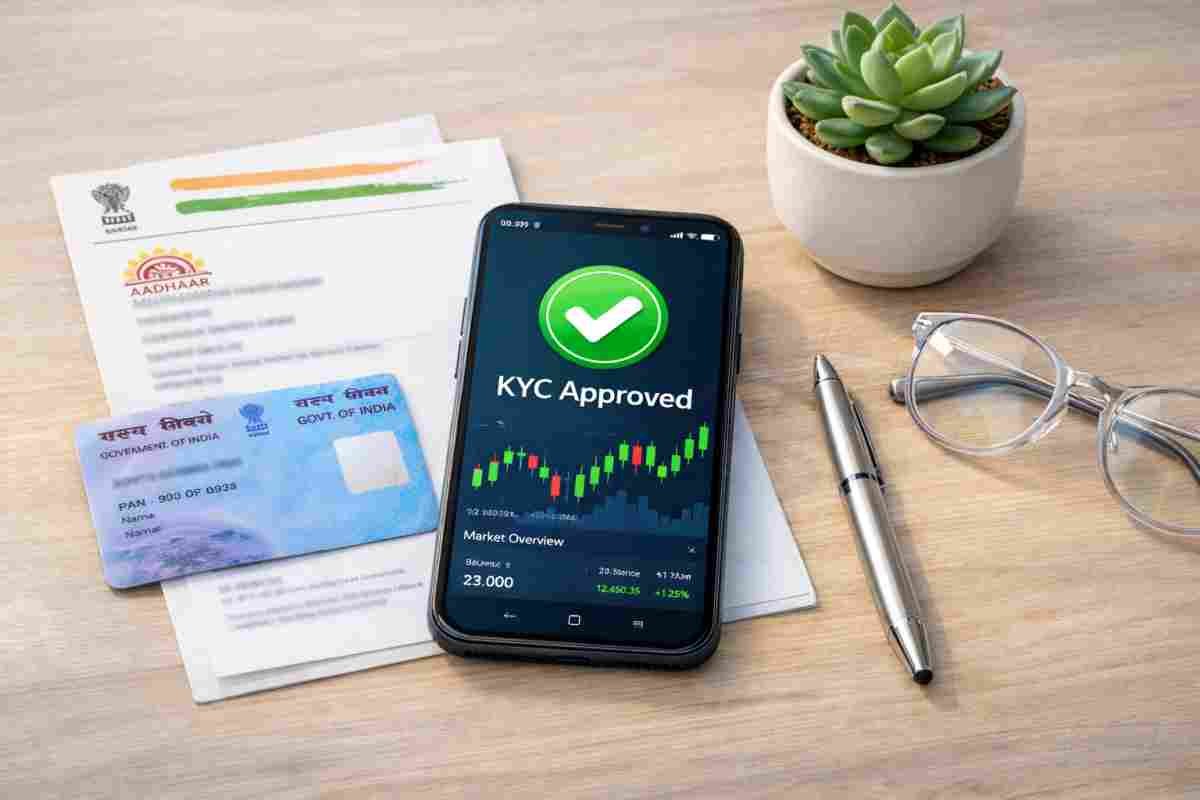
The Indian stock market has evolved from a crowded trading floor in Dalal Street to a sophisticated digital ecosystem accessible from the palm of your hand. For decades, investing in stocks, mutual funds, or government bonds was viewed as a complex affair reserved for financial experts. Today, with the rise of digital payments and financial literacy, investing has become a necessity for wealth creation. Whether your goal is to save for retirement, buy a home, or simply beat inflation, the first and most critical step is learning how to open a stock broker account in India.
In the current regulatory framework governed by the Securities and Exchange Board of India (SEBI), you cannot simply walk into a company and buy shares. The process is standardized to ensure transparency and safety. To trade in equities, derivatives, or even initial public offerings (IPOs), you require two specific accounts linked together: a Demat Account (which holds your shares in electronic form) and a Trading Account (which facilitates the Buying & sellings). Most modern brokers offer a combined 2-in-1 or 3-in-1 account to streamline this process.
This guide is tailored for beginners and first-time investors. We will break down the jargon, compare the types of brokers, walk you through the documentation, and explain the costs involved so you can start your investment journey with confidence.
Types of Brokers: Full-Service vs. Discount Brokers
When you decide to open a stock broker account, the first decision you must make is which type of broker to partner with. In India, brokers primarily fall into two categories:
Full-Service Brokers
These are traditional brokerage houses (such as ICICI Direct, HDFC Securities, or Kotak Securities) that offer a comprehensive suite of services.
- Pros: They provide research reports, relationship managers, investment advice, and portfolio management services. They are ideal for beginners who want guidance.
- Cons: They charge significantly higher brokerage fees, usually a percentage of the transaction value (e.g., 0.3% to 0.5% per trade). They also levy high annual maintenance charges (AMC).
Discount Brokers
These are tech-first platforms (such as Zerodha, Groww, or Angel One) that disrupted the market by focusing on low-cost trading.
- Pros: They offer flat-fee brokerage (e.g., ₹20 per trade irrespective of the order size) or even zero brokerage on delivery trades (equity investments held for more than a day). They offer intuitive apps and low AMC.
- Cons: They do not provide personalized advisory services. If you need hand-holding or stock tips, you may have to rely on their community forums or third-party tools.
Which one should you choose? If you are a beginner looking to invest for the long term and do not need frequent advice, a discount broker is often the most cost-effective way to open a stock broker account. If you prefer having a dedicated expert to guide you through market volatility, a full-service broker is preferable.
Eligibility Criteria: Who Can Open an broker Account?
The eligibility to open a stock broker account in India is straightforward and inclusive. According to SEBI guidelines, the following individuals and entities are eligible:
- Indian Residents: Any individual who is a citizen of India and is 18 years or older can open an account. There is no upper age limit.
- Non-Resident Indians (NRIs): NRIs can also invest in the Indian stock market, though they usually require a Non-Resident External (NRE) or Non-Resident Ordinary (NRO) account linked to their trading account. The process involves additional documentation.
- Minors: A guardian (parent or legal guardian) can open a Demat and trading account on behalf of a minor. Once the minor turns 18, the account must be converted to a regular account.
- Hindu Undivided Families (HUFs): A HUF can open a separate trading account in the name of the family.
- Partnerships and Companies: Business entities can also open accounts, subject to providing the necessary incorporation certificates.
Documents Required: The Checklist
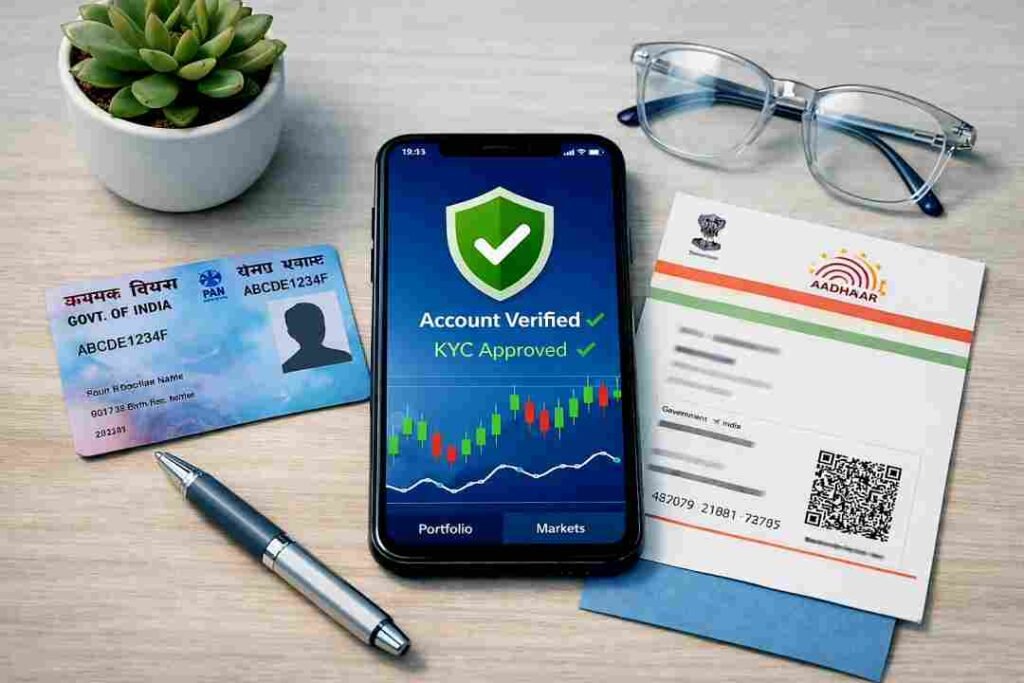
To ensure a smooth online KYC process, you need to keep your documents handy. SEBI mandates a uniform KYC (Know Your Customer) process for all financial institutions. Here is the detailed list of documents required to open a stock broker account:
1. Proof of Identity (PoI)
- PAN Card: This is mandatory. The Income Tax Department’s Permanent Account Number (PAN) is the primary identifier for all financial transactions in India. Without a PAN, you cannot open a stock broker account or trade.
- Voter ID, Passport, or Driving License: These are accepted as secondary identity proofs.
2. Proof of Address (PoA)
- Aadhaar Card: This is the most commonly used document due to its widespread acceptance and integration with e-sign services.
- Alternatively, a recent utility bill (electricity, water, gas), bank statement, or passport can be used if the Aadhaar address is not updated.
3. Bank Account Proof
- A canceled cheque leaf (with your name printed) or the first page of your bank passbook.
- The bank account must be in your name. If you are opening a joint account, the bank account must match the primary holder.
4. Photograph
- A recent passport-sized photograph is required for the account opening form.
5. Income Proof (Optional for Some)
- While not always required for opening the account, some brokers may ask for income proof (such as Form 16 or salary slips) to set higher trading limits for Futures & Options (F&O) segments.
Step-by-Step Guide: How to Open a Stock Broker Account
There are two primary methods to open a stock broker account: the modern online method and the traditional offline method.
The Online Process (Preferred)
This is the fastest way to open a stock broker account. The entire process, from registration to activation, can be completed in 15 to 30 minutes.
- Choose a Broker: Visit the website or download the app of the broker you wish to use (e.g., Groww, Zerodha, Upstox, or your bank’s trading portal).
- Initiate Registration: Click on “Open an Account” or “Sign Up.” You will be asked to enter your mobile number and email ID.
- PAN Verification: Enter your PAN card details. The system will automatically verify your name and date of birth with the government records.
- Aadhaar OTP Verification: You will be prompted to enter your Aadhaar number. An OTP (One-Time Password) will be sent to your Aadhaar-registered mobile number. Enter this to authenticate your identity.
- Fill the Application Form: Complete the online application form with your personal details, occupation details, and financial information (annual income, net worth).
- E-Sign: This is the most critical step. Once the form is filled, you will be redirected to a DigiLocker or Aadhaar e-sign page. You will enter the OTP sent to your Aadhaar-linked mobile number to sign the document digitally. This replaces the need for a physical signature.
- Video KYC (In-Person Verification): SEBI mandates a Video KYC. You will receive a link to connect with a representative via video call. The call is recorded. You will be asked to show your PAN card (physically) and confirm your details.
- Account Activation: Once the video KYC is approved (usually within 24 hours), you will receive your Client ID and Trading ID via email. Your account is now active.
The Offline Process
For those who are not comfortable with digital signatures or video calls, the offline process is still available.
- Visit a Branch: Visit the nearest branch of your chosen broker or their partner bank.
- Fill Physical Forms: Obtain the account opening kit. Fill out the forms with your details.
- Attach Documents: Submit self-attested copies of your PAN, Aadhaar, and bank proof (along with the original documents for verification).
- In-Person Verification (IPV): A branch official will verify your documents and sign off on the IPV.
- Dispatch: The broker dispatches the forms to their central processing team. It can take 3 to 7 business days to activate the account via this route.
Fees and Charges: Understanding the Costs
One of the biggest concerns for beginners is the cost associated with maintaining a stock broker account. It is crucial to understand that while opening the account is often free, there are various recurring and transactional charges.
1. Account Opening Charges
Many discount brokers offer free account opening. Full-service brokers often charge a one-time fee ranging from ₹500 to ₹1,000.
2. Annual Maintenance Charges (AMC)
This is the fee charged to maintain your Demat account. It is usually charged annually or quarterly.
- Discount Brokers: ₹0 to ₹300 per year (many offer lifetime free accounts).
- Full-Service Brokers: ₹400 to ₹1,000 per year, depending on the plan.
3. Brokerage Fees
This is the fee charged by the broker for executing your trade.
- Delivery Trading (Buy & Hold): Usually free with discount brokers; full-service brokers charge around 0.25% to 0.5% of the transaction value.
- Intraday Trading (F&O): Discount brokers charge a flat fee (e.g., ₹20 per executed order). Full-service brokers charge a percentage (0.03% to 0.05%).
4. Statutory and Regulatory Charges
These are not paid to the broker but to the government and exchanges. They are deducted automatically from your trading account.
- Securities Transaction Tax (STT): Levied by the government on every buy and sell transaction. This is a major cost for frequent traders.
- GST: 18% Goods and Services Tax is levied on the brokerage fee.
- SEBI Turnover Fees: A nominal charge based on the turnover volume.
- Stamp Duty: A state government charge on the transaction value.
Safety Tips: How to Keep Your Account Secure
With the digitization of financial services, cybersecurity is paramount. Once you open a stock broker account, you must adopt best practices to protect your capital.
- Use Two-Factor Authentication (2FA): Ensure that your trading account requires a password plus an OTP to log in. Never share your OTP with anyone, even if they claim to be from the broker’s customer support.
- Beware of Unofficial Channels: Brokers or SEBI will never ask you to transfer money to a personal bank account for “tips” or “guaranteed returns.” If someone promises assured high returns in exchange for trading through your account, it is likely a fraud.
- Regular Portfolio Check: Log in to your account regularly to ensure no unauthorized transactions have occurred. Most brokers send an SMS and email alert for every trade placed; monitor these diligently.
- Demat Account Nomination: After you open a stock broker account, ensure you add a nominee. This ensures that your family can claim the holdings in the event of an unforeseen circumstance.
- Strong Passwords: Avoid using simple passwords. Use a combination of uppercase, lowercase, numbers, and special characters.
Frequently Asked Questions (FAQs)
1. Can I have multiple Demat and Trading accounts?
Yes. SEBI does not restrict the number of accounts an individual can hold. You can open a stock broker account with multiple brokers (e.g., one discount broker for low-cost trading and one full-service broker for research). However, having too many accounts can make portfolio management cumbersome.
2. Is it safe to open a stock broker account online?
Yes, provided the broker is SEBI-registered. Always verify the broker’s registration number on the SEBI website before proceeding. The online KYC process (Aadhaar OTP + Video KYC) is highly secure and encrypted, meeting the highest data protection standards mandated by the government.
3. How much money do I need to start trading?
It depends on the segment. For delivery trading (buying shares to keep), you need the full amount of the shares you wish to buy (e.g., ₹10,000). For intraday trading, you can trade with a margin. Some brokers allow account opening with zero initial funding, but you must add money to your trading account before purchasing shares.
4. What is the difference between a Demat Account and a Trading Account?
A Trading Account acts like the front door; it is where you place the orders to buy or sell shares. A Demat Account acts like the warehouse; it stores the shares you own in electronic format. You need both to operate in the stock market.
5. Can an NRI open a stock broker account?
Yes. NRIs can invest in India through the Portfolio Investment Scheme (PIS) route. They need to open a NRE/NRO savings account and link it to a Demat account. The process is slightly longer as it requires a mandate from the designated bank (usually a branch of the Reserve Bank of India authorized dealer).
6. What happens to my Demat account if I stop using it?
If you stop using your account but do not close it, you will continue to be charged Annual Maintenance Charges (AMC). If these charges remain unpaid, the broker may freeze the account or, after prolonged non-payment, recover dues by selling securities (as per the agreement). It is always better to formally close the account if you do not plan to use it.
Conclusion
Understanding how to open a stock broker account in India is the gateway to financial independence. Thanks to SEBI’s robust regulatory framework and the advent of digital KYC, the process today is simpler, faster, and more transparent than ever before. Whether you choose a full-service broker for the advisory comfort or a discount broker for cost efficiency, the most important step is to start.
By investing regularly, you harness the power of compounding and take control of your financial future. The stock market is not a gamble; it is a platform for wealth creation when approached with knowledge and discipline.
Are you ready to start your investment journey?
Don’t let the paperwork intimidate you. Gather your PAN and Aadhaar, compare the top SEBI-registered brokers, and open your Stock Broker Account today. The best time to invest was yesterday; the next best time is now.
Disclaimer: This article is for educational purposes only. Investments in the stock market are subject to market risks. Please consult your financial advisor before making any investment decisions.
