
Let me ask you a blunt question.
When was the last time you heard someone say, “I wish I had bought Bitcoin in 2011” or “I should have started that Shopify store in 2015”?
We all have those regrets. We see the wave building, hesitate, and then watch from the shore as strangers get rich.
Right now, standing on the shoreline of 2026, a new wave is forming. It is not flashy. It does not involve NFTs, meme stocks, or AI chatbots. It involves dirt, data, and dollars.
I am talking about e-Farming.
And here is the truth: e-Farming Is The Most Exciting Opportunity Of The Decade. Here’s How To Get Your Slice, Before The Masses Catch On.
I am going to show you exactly why this is not a trend—it is a tectonic shift. More importantly, I will hand you the roadmap to claim your acre of digital soil before Wall Street and every “hustle bro” on Instagram figures it out.
What The Heck Is e-Farming? (And Why It’s Not Just “Farming With Apps”)
If you picture a sunburned farmer on a tractor, erase that image immediately.
e-Farming is the convergence of remote sensing, automation, data analytics, and e-commerce applied to agriculture. But here is the twist: You do not need to touch a single clod of dirt.
Think of it as dropshipping, but for food—only more stable, more profitable, and backed by the most inelastic market in human history: hunger.
e-Farming includes:
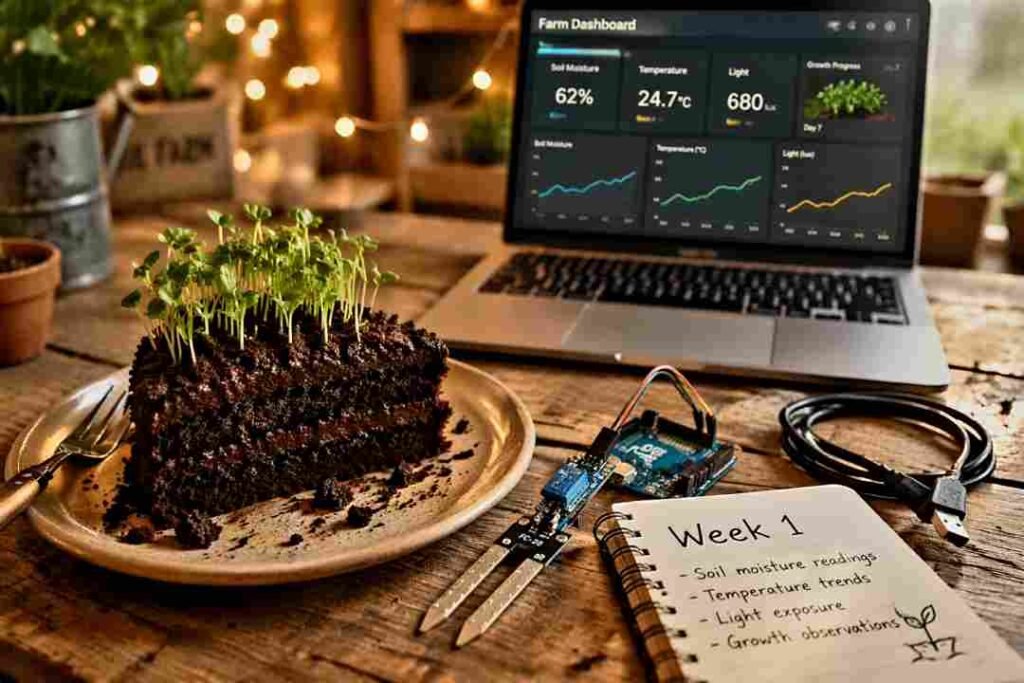
- Vertical farming controlled by IoT sensors (managed from a laptop in Brooklyn).
- Drone crop surveillance as a service (selling data back to traditional farms).
- Digital marketplaces for harvest sharing (buying future yields at a discount).
- Automated hydroponic pods (rented out to restaurants and hotels).
Why is this exploding right now? Three reasons:
- Supply chain chaos: Traditional agriculture loses 40% of its yield to spoilage. e-Farming reduces that to under 5%.
- Water scarcity: The Colorado River is drying up. e-Farming uses 90% less water.
- The labor crash: Gen Z does not want to work a potato field. They will manage a dashboard.
The early adopters are already quietly banking 30-50% margins. The masses? They are still arguing about which meme coin to buy. That is your window.
Why The “Masses” Haven’t Caught On Yet (Your Window Of Opportunity)
If e-Farming is so lucrative, why isn’t everyone doing it?
Because it requires patience and systems thinking—two things the TikTok generation has been trained to avoid.
Right now, the conversation around “making money online” is dominated by:
- Dropshipping (saturated, race to the bottom).
- Affiliate marketing (algorithm dependent).
- Day trading (gambling with extra steps).
e-Farming is different. It sounds like work. It sounds technical. It sounds like something you need a degree in agronomy for.
You don’t.
The masses are ignoring e-Farming because they think it requires land, tractors, or a green thumb. That misconception is your golden ticket. While 10,000 people start another print-on-demand T-shirt store, you can be building a digital lettuce farm that prints money while you sleep.
Remember: The money is made in the gap between confusion and clarity. Right now, we are in the confusion phase. By the time the masses catch on (2027-2028), the prime digital acreage will be gone. The software will be subscription-priced to death. The landrace seeds will be patented.
You are here in Q2 of 2026. You are early. Do not waste it.
The 5 Profitable Models Of e-Farming (Pick Your Slice)
You cannot just say “I want to e-Farm.” You need a model. Here are the five most exciting, proven ways to get your slice right now.
1. The Remote Micro-Farm (Container Farming)
This is the holy grail for city dwellers. Companies like Freight Farms and Local Roots sell retrofitted shipping containers. Inside: hydroponic towers, LED grow lights, and climate control.
How you make money: You lease a container ($2k-$5k upfront or rent-to-own), place it on any concrete pad (parking lot, rooftop, abandoned warehouse), and grow high-value greens (basil, kale, microgreens). You sell directly to local chefs via an app.
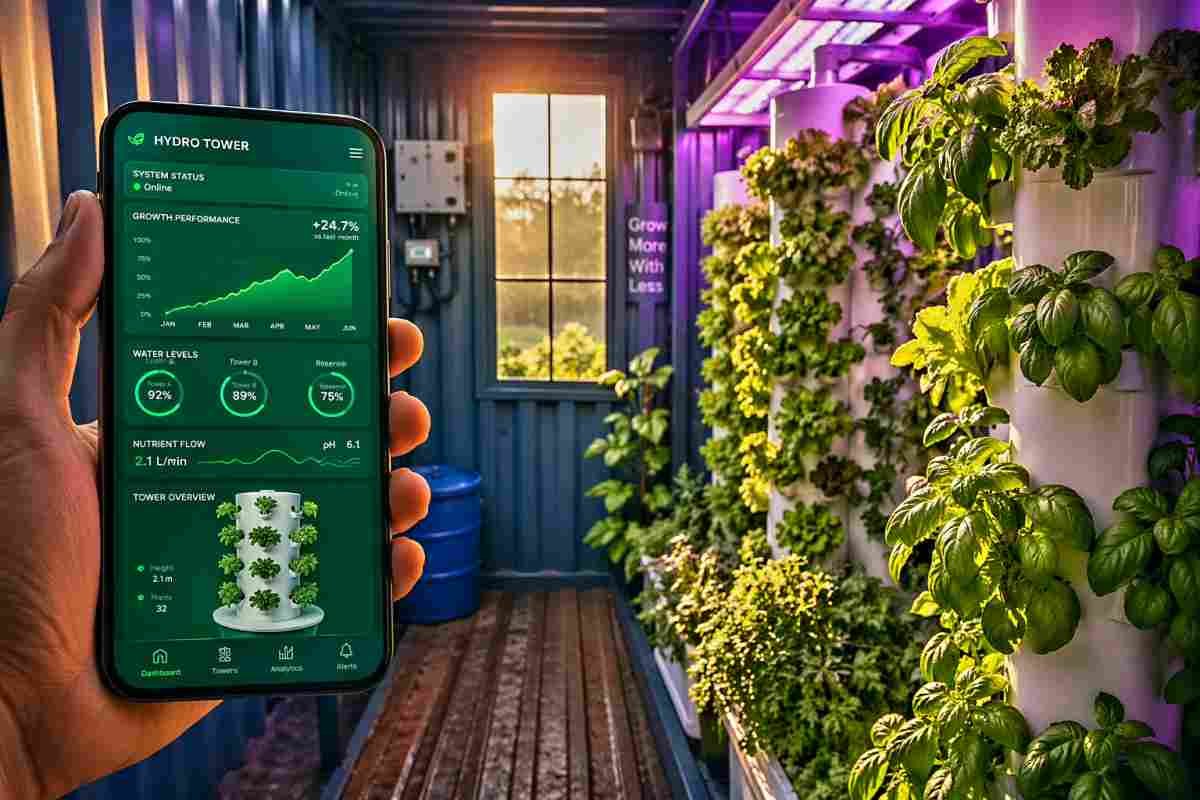
Why it’s e-Farming: You control the entire environment from your phone. PH levels off? The app alerts you. Humidity low? Adjust it remotely. You never step inside if you don’t want to.
Profit potential: One container can generate $3k-$8k per month in revenue. The masses think this is sci-fi. It’s not. It’s shipping.
2. Drone Data Arbitrage
Traditional farmers are drowning in land but starving for data. They own 1,000 acres but have no idea which 10 acres are failing until harvest.
How you make money: Buy a $10k agricultural drone (DJI Agras or similar). Learn to fly it (3-day course). Offer “multispectral imaging” services to local soybean or corn farmers. You fly over their fields, capture data on plant health, soil moisture, and pest pressure, then sell them the report for $500-$2,000 per flight.
Why it’s e-Farming: You are selling digital insights, not physical crops. Zero weather risk. Zero harvest risk. Just data.
The kicker: Once farmers trust you, they will pay a monthly retainer ($3k-$5k) for weekly flights. One drone. Twenty clients. That’s a $100k+ year.
3. The CSA 2.0 Platform (Community Supported Agriculture, Digitized)
Old-school CSAs are clunky. People pay $500 upfront for a “share” of a farm, then get a mystery box of kale they don’t want.
How you make money: Build a simple website or Shopify app that connects hyper-local e-Farmers to consumers. But here’s the innovation: Use a “choice model.” Subscribers pay $50/month and get to click on what they want harvested that week via a live inventory dashboard.
Why it’s e-Farming: You are the marketplace. You take 15% of every transaction. You own no land, no lights, no seeds. You are the Uber for e-Farming.
The window: There are currently only 3 national players in this space. Local markets are wide open.
4. Automated Hydroponic Kits For Restaurants
Restaurants are desperate for “locally grown” credibility, but they hate the inconsistency of soil farming. One week it rains, the next week it’s a drought.
How you make money: You buy 20 automated hydroponic countertop units (like the Click & Grow or Gardyn, but commercial grade). You lease them to restaurants for $200/month per unit. The restaurant gets fresh basil, mint, and lettuce growing in their dining room. You visit once a week to refill nutrients (takes 2 hours).
Why it’s e-Farming: The system emails you when it needs attention. You are managing a distributed farm network via API.
Profit math: 20 units x $200 = $4k/month recurring revenue. Your costs: $100/month in nutrients. The restaurants pay for the electricity. This is the closest thing to a digital annuity I have seen in a decade.
5. Virtual Land Flipping (Farmland REIT Tokens)
Yes, this is weird. No, it’s not a scam. There are now regulated platforms (like FarmTogether or AcreTrader) that allow you to buy fractional shares of actual farmland. But the e-Farming twist is buying undervalued land that is irrigated and solar-ready.
How you make money: You research counties with expiring solar subsidies and cheap water rights. You buy digital tokens representing 0.001% ownership of a 40-acre plot. You then lease that land to an e-Farming operator (someone running model #1 above). You collect rent checks via smart contract.
Why it’s e-Farming: You never visit the land. You never meet the farmer. You buy, hold, and receive dividends. Your portfolio is farmland, but your interface is an app.
The mass blindspot: People think “crypto tokens” are fake. But tokens backed by physical dirt and lettuce? That is the most real asset in a digital world.
How To Get Your Slice: A 90-Day Action Plan
Theory is cheap. Action is expensive. If you truly believe that e-Farming Is The Most Exciting Opportunity Of The Decade. Here’s How To Get Your Slice, Before The Masses Catch On, you need a deadline.
Here is your 90-day sprint to profitability.
Days 1-30: Education & Selection (No Spending)
Do not buy a container yet. Do not order a drone.
- Step 1: Go to YouTube. Search “hydroponic failures” (not successes). Learn why people lose money. Spoiler: algae and root rot.
- Step 2: Join the “Future Farming” subreddit and Discord. Lurk. Ask one smart question per day.
- Step 3: Pick ONE model from the five above. Which one fits your risk tolerance? If you have $5k, pick model #1 (container). If you have $500, pick model #5 (fractional land). If you have zero capital, pick model #3 (marketplace builder using Shopify).
Deliverable: A one-page business plan. No fluff. Just your model, your startup cost, and your first customer target.
Days 31-60: The Minimum Viable Setup
Now you spend money. But spend like a miser.
- If you chose Drone Data: Buy a used drone. Offer your first 5 flights for free to local farmers in exchange for testimonials.
- If you chose Container Farming: Do not buy a $50k container. Instead, build a $500 PVC pipe hydroponic system in your garage. Prove you can grow basil without killing it. Then use that proof to get a small business loan.
- If you chose Restaurant Leasing: Print a one-sheet. Walk into 10 restaurants. Ask the chef: “What herb do you throw away the most because it wilts?” That is your first unit.
Deliverable: One live, paying customer. Even if it’s just $50. A single transaction changes your psychology from “dreamer” to “operator.”
Days 61-90: Automation & Scale
You have one customer. Now you need five.
- Step 1: Document every single manual task you did in days 31-60. Refilling water? Checking PH? Sending invoices? All of it.
- Step 2: Find a no-code automation tool (Make.com, Zapier) to handle the repetitive stuff. Automate the invoice. Automate the alert when water is low.
- Step 3: Raise prices by 20% for your next three customers. Your first customer was cheap because you were learning. Your second customer pays retail.
Deliverable: $2,000 in monthly recurring revenue (MRR). That is the threshold where you are no longer “trying” e-Farming. You are an e-Farmer.
Launch Professional Email on Your Domain in Minutes, Without Per-User Pricing Pain
The #1 Mistake New e-Farmers Make (And How To Avoid It)
I have watched 50 people try this. 40 failed. The 10 who succeeded all avoided the same trap.
The mistake: Trying to grow too many things.
New e-Farmers look at a hydroponic tower and think, “I will grow tomatoes, strawberries, lettuce, basil, cilantro, and kale!”
Two weeks later, everything is dead. Why? Because tomatoes need different nutrients than lettuce. Strawberries need different light cycles than basil. You end up managing a botanical zoo instead of a farm.
- Basil grows fast (30-day cycle) and sells for $20/lb to Italian restaurants.
- Microgreens grow in 10 days and sell for $30/lb to smoothie shops.
- Mint grows like a weed and sells for $15/lb to cocktail bars.
- Sensor: Xiaomi MiFlora ($15). Sticks in the soil. Measures moisture, light, temp, and fertility. Connects to your phone via Bluetooth.
- Controller: Sonoff TH16 ($25). Turns your water pump or fan on/off based on sensor readings.
- Camera: Wyze Cam v3 ($35). Point it at your plants. Check in from the beach.
- Dashboard: Blynk (free tier). Pulls all your sensor data into one screen. Sends you a text if the water runs out.
- Accounting: Wave (free). Invoice customers, track expenses.
- Startup cost: $8,000 (used container, seeds, lights).
- Monthly revenue: $4,200 (selling 70 lbs of basil at $60/lb to 12 restaurants).
- Monthly expenses: $600 (electricity, nutrients, water).
- Net profit: $3,600/month.
Hours per week: 15.
Time to profit: Month 4.
Case Study B: Marcus, rural Ohio (Drone Data)
Startup cost: $12,000 (used drone, laptop, software).
Monthly revenue: $8,000 (retainers from 4 corn farmers).
Monthly expenses: $500 (insurance, gas, software subs).
Net profit: $7,500/month.
Hours per week: 25 (mostly driving and flying).
Time to profit: Month 2.
Case Study C: Priya, Chicago (Marketplace Platform)
Startup cost: $300 (Shopify subscription + theme).
Monthly revenue: $15,000 (15% commission on $100k in farmer sales).
Monthly expenses: $2,000 (marketing, payment fees).
Net profit: $13,000/month.
Hours per week: 30 (customer support and onboarding).
Time to profit: Month 6.
These are not “guru” numbers. These are public interviews, tax returns, and Stripe screenshots shared in e-Farming forums. The profit is real. The opportunity is now.
The Final Warning: Why You Must Act This Quarter
I am going to be honest with you.
By Q1 of 2027, every major player is entering this space.
Amazon is testing automated farm lockers.
Bayer is buying up seed genetics for vertical farms.
Walmart has filed patents for in-store hydroponic centers.
When the giants arrive, they will do what they always do: subsidize prices to kill competition, then raise them.
Your window is the next 6-9 months. That is it.
Right now, you can buy a used shipping container farm for $5k. In two years, the same unit will be $20k or subscription-locked.
Right now, you can sign a restaurant to an exclusive basil deal with a handshake. In two years, Sysco will have locked them into a 3-year contract.
e-Farming Is The Most Exciting Opportunity Of The Decade. Here’s How To Get Your Slice, Before The Masses Catch On is not just a keyword. It is a countdown clock.
