
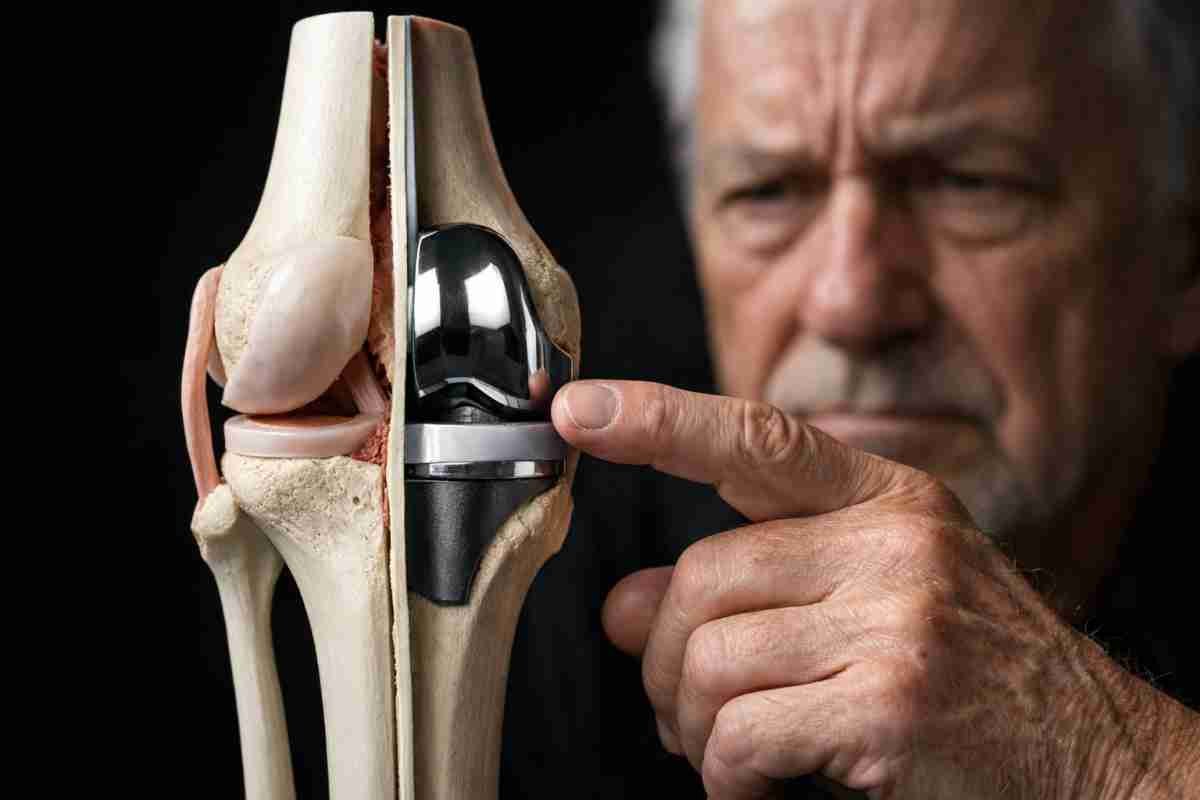
If you are one of the millions suffering from chronic knee pain, you have likely been told that a total knee replacement is the inevitable endgame. Doctors show you the X-rays, point to the bone-on-bone friction, and suggest that surgery is the only real solution.
But what if that advice is leaving out a crucial part of the story? What if the multi-billion-dollar orthopedic industry has a financial incentive to push you toward the operating table, even when effective, non-surgical alternatives exist?
Let’s look at the facts that many patients are never told.

The Multi-Million Dollar “Hoax”: A Harsh Reality
The term “hoax” is strong, but recent investigations have revealed a disturbing truth about the safety and longevity of the devices being implanted into patients’ bodies. It’s not that the surgery never works; it’s that the industry has been hiding a dirty secret: faulty implants.
An explosive investigation by BBC Radio 4’s File on 4 Investigates uncovered that surgeons raised serious concerns about a specific knee implant a full eight years before the manufacturer finally withdrew it from the market .
The implant in question, the ‘NexGen’ knee system made by medical giant Zimmer Biomet, was fitted into over 10,000 UK patients . These patients were left in agony. One patient, Debbie Booker, described her experience after her 2016 surgery: within a year, the implant was slipping from her bone. She told investigators she was on heavy narcotics like fentanyl and morphine just to cope with the pain . Another patient was told by her consultant that every time she stood up, she was effectively “standing on a broken leg” .
The outcome? These patients didn’t just have one surgery; hundreds have been forced to undergo a second, even more complex corrective operation. The National Joint Registry eventually found that patients with this specific implant were nearly twice as likely to need revision surgery compared to the average knee replacement .
If you are considering going under the knife, you must ask yourself: Is the promise of a new knee worth the risk of being part of the next unreported scandal?
The High-Stakes Gamble of Surgery
Beyond the risk of faulty hardware, the surgery itself is a major physical trauma. While modern medicine has improved recovery times, the myth that you will be “good as new” is just that—a myth.
High-impact activities like running or jogging are generally off the table for life, as they can wear down the implant. Furthermore, if you postpone surgery for too long while trying to manage the pain, muscle weakening and joint contractures can actually make the surgery more complicated and the outcome less successful .
So, what is the alternative? Do you just have to live with the pain?
Eliminate Knee Pain For Good In 1 Minute A Day
Here is the truth the “surgery-first” approach often ignores: The muscles are the shock absorbers for your joints. When the quadriceps, hamstrings, and glutes are weak, every pound of force goes straight through the knee cartilage. When those muscles are strong, they take the load.
You do not need an hour in the gym. You need consistency. By dedicating roughly one minute spread throughout the day to specific movements, you can stabilize the knee joint and eliminate pain.
Here are three “Physical Therapy secrets” you can start today:
1. The “No-Hands” Chair Trick (Builds Strength Instantly)
Every time you get up from a chair, you have an opportunity to heal your knees.
- The Move: Scoot to the edge of your seat. Plant your feet under your knees. Lean your chest forward and stand up without using your hands .
- Why it works: This forces your quads and glutes to do the work. If you do this 10 times a day, you are performing thousands of therapeutic “mini-squats” a year without any special gym equipment .
2. The Morning “Oil Change” (30 Seconds)
Knee stiffness in the morning is often due to a lack of synovial fluid (the body’s natural joint lubricant) circulation.
- The Move: Before you get out of bed, lie on your back and perform heel slides. Slowly slide one heel toward your buttocks, bending the knee, then slide it back down . Do this 10 times on each leg.
- Why it works: This gently pumps fluid into the cartilage, reducing the “rusty hinge” feeling and preparing the joint for the day .
3. The Staircase Secret (The “Good Down, Bad Up” Rule)
Stairs are often the enemy of bad knees, but they can be a therapeutic tool.
- The Move: When going up stairs, lead with your stronger leg. When going down the stairs, lead with your weaker leg (or the one that hurts) .
- Why it works: This uses physics to your advantage. Going up, the strong leg pushes the weight; going down, the strong leg controls the descent, taking the pressure off the sensitive knee. Use the handrail for balance and go slowly.
- Top Brain and Hearing Health: A Complete Guide to Sharper Thinking and Clearer Hearing
Natural Support: Fueling the Fix
Exercise is only half the battle. To truly eliminate pain, you must give your body the tools to rebuild. A joint-friendly diet is essential.
- Fight Inflammation: Incorporate omega-3 fatty acids (found in fish, flaxseeds, and walnuts) and turmeric to naturally reduce joint inflammation .
- Rebuild Cartilage: Nutrients like Vitamin C (citrus, bell peppers) support collagen production, which is the building block of cartilage .
A Note on Supplements:
While the scientific evidence is sometimes conflicting, many orthopedic doctors acknowledge that supplements like Glucosamine and Chondroitin Sulfate can support articular cartilage health . Some patients find significant relief with natural supplements like these, though you should always consult your doctor before starting a new regimen.
Rethinking the “Last Resort”
Surgery is a personal decision. For some with severe deformities or traumatic injuries, it is unavoidable. However, the standard line of “you’ve tried everything” is often a signal that you haven’t tried the right conservative therapy.
Leading orthopedic hospitals confirm that non-surgical methods should always be the first line of defense. Physical therapy strengthens the muscles that act as shock absorbers . Weight loss drastically reduces the load on the knee—for every pound lost, there is a four-pound reduction in knee stress .
Before you let a surgeon schedule you for a procedure that involves cutting into bone and implanting hardware with a history of recalls, invest one minute a day in your own body.
Start with the chair squat today. Your knees might just thank you by avoiding the knife.
